NEEDS ANALYSIS
The organization's name and the names of individuals involved have been altered to protect confidentiality. This project is shared with permission from the client.
BACKGROUND
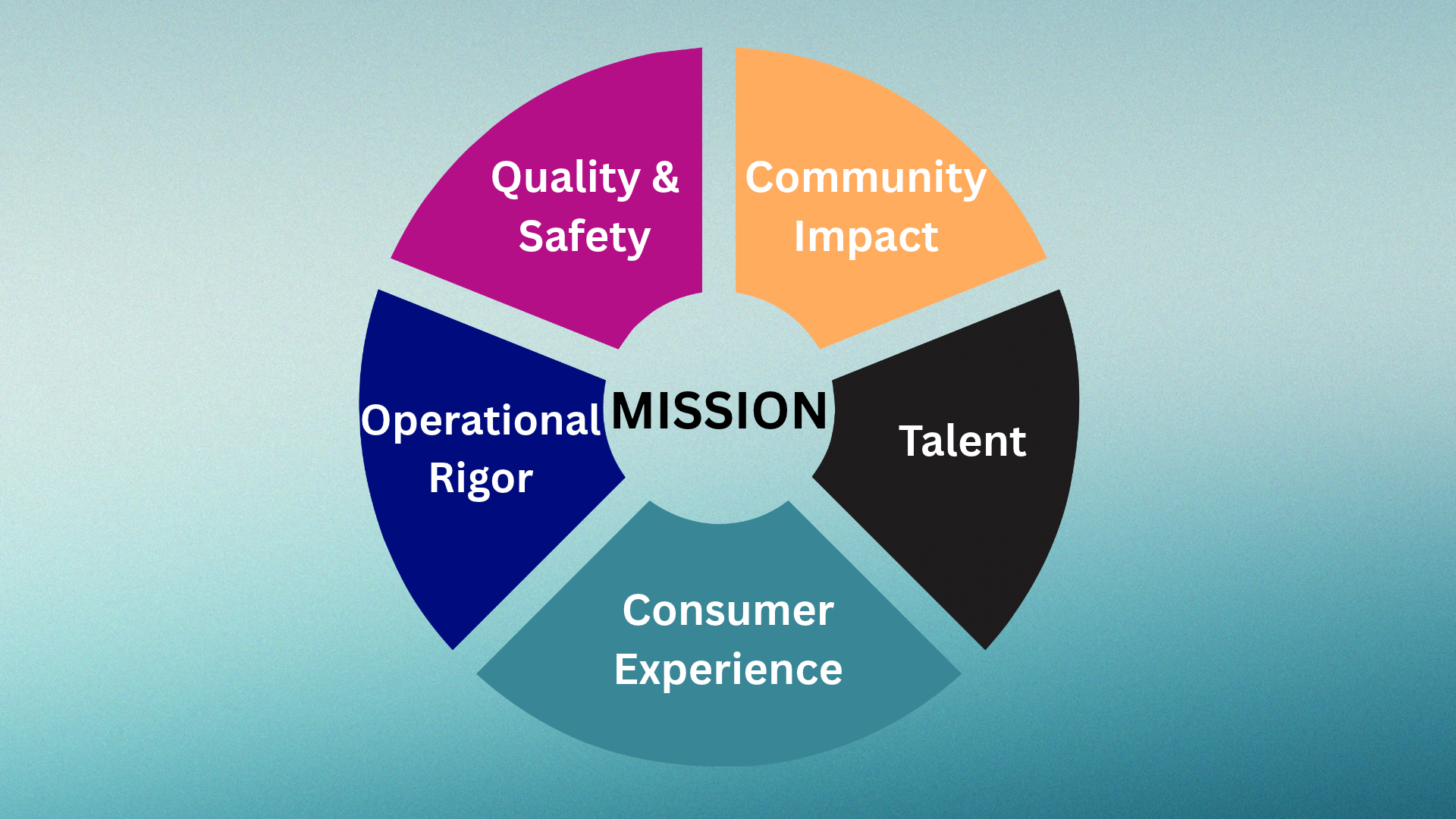
Elevate Healthcare (a pseudonym) is a Catholic health system operating across 16 states and the District of Columbia with a workforce of roughly 97,000–99,000 associates and more than 90 hospitals. Elevate Healthcare is mission-driven with an emphasis on vulnerable populations, as reflected by recent commitments of $1.7 billion in care for persons living in poverty and community benefit programs, along with $1.8 billion in unreimbursed Medicare care. Elevate is positioned as one of the nation’s leading Catholic health ministries, reflecting one of the 5 sections of its mission and strategic imperatives–Community Impact.
Driven by the mission imperative, Operational Rigor, the Elevate Learning & Leadership Institute (L&LI) initiated a needs assessment after identifying a performance problem directly affecting operational reliability and workforce experience. The L&LI discovered that key frontline leaders were varying significantly in their ability to lead process improvement (PI) initiatives in the operating room (OR). Tasked with strengthening operational efficiency and leadership capability, the L&LI determined that a needs assessment should be carried out to identify critical gaps and provide intervention selections.
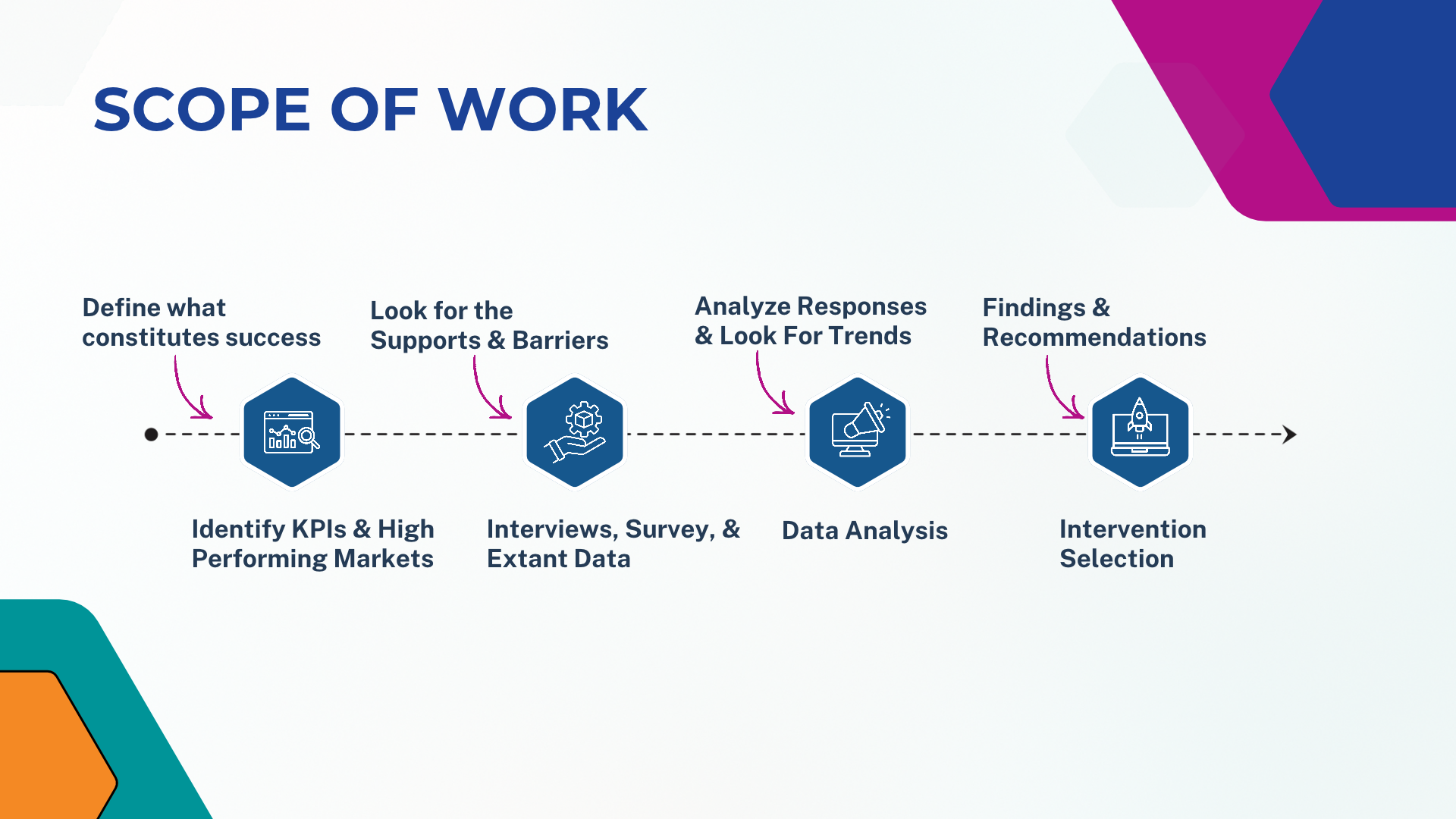
To conduct our needs analysis our team worked with L&LI project sponsors to utilize a mixture of data collection methods including semi-structured interviews and surveys. The result of our assessment is a comprehensive needs assessment to assist the L&LI leadership team in identifying areas of performance gaps and feasible interventions. While ultimately our data sample was too small to make definitive conclusions, we were still able to create a successful first step into future investigative efforts.
The Challenge
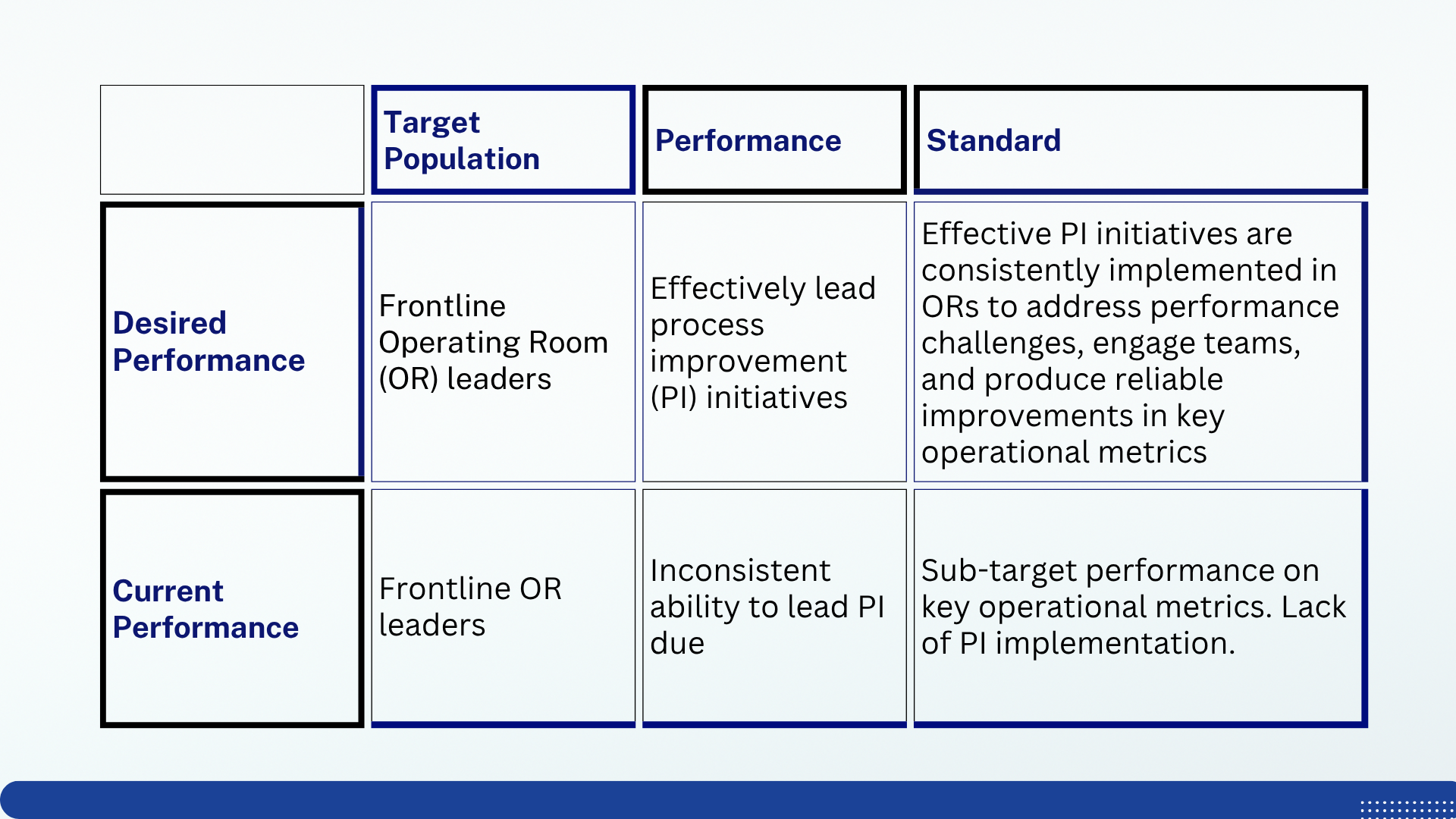
The desired performance of Elevate Healthcare's OR leaders is to effectively apply PI initiatives, the outcome of which will be sustaining/improving performance at or above industry benchmarks. The current performance indicates uneven results, based on two specific metrics used to measure performance success. The first metric measured was First Case On-Time Starts (FCOTS) averaged 65.9%, well below the 75% benchmark. The second metric in place, Room Turnover Time (RTT), averaged 30.8 minutes which was above the 30-minute target. The L&LI notes that it appears some leaders face barriers (possibly related to knowledge gaps, skill limitations, inconsistent processes, insufficient support, or misaligned expectations) that impede the ability to effectively apply PI skills and produce reliable improvements in key operational metrics. A needs assessment will provide insight into supports that enable exemplary OR leader performance and the barriers that impede non-exemplary leader performance, as well as identification of common factors influencing performance across Elevate Healthcare sites and markets.
Plainly put, in some cases PI initiatives in place are not working to maintain or exceed industry benchmarks. The identified gap is where these PI initiatives are failing. Our goal was to use Van Tiem’s HPT methodology to systematically approach this problem.
Data Collection & Analysis Approach
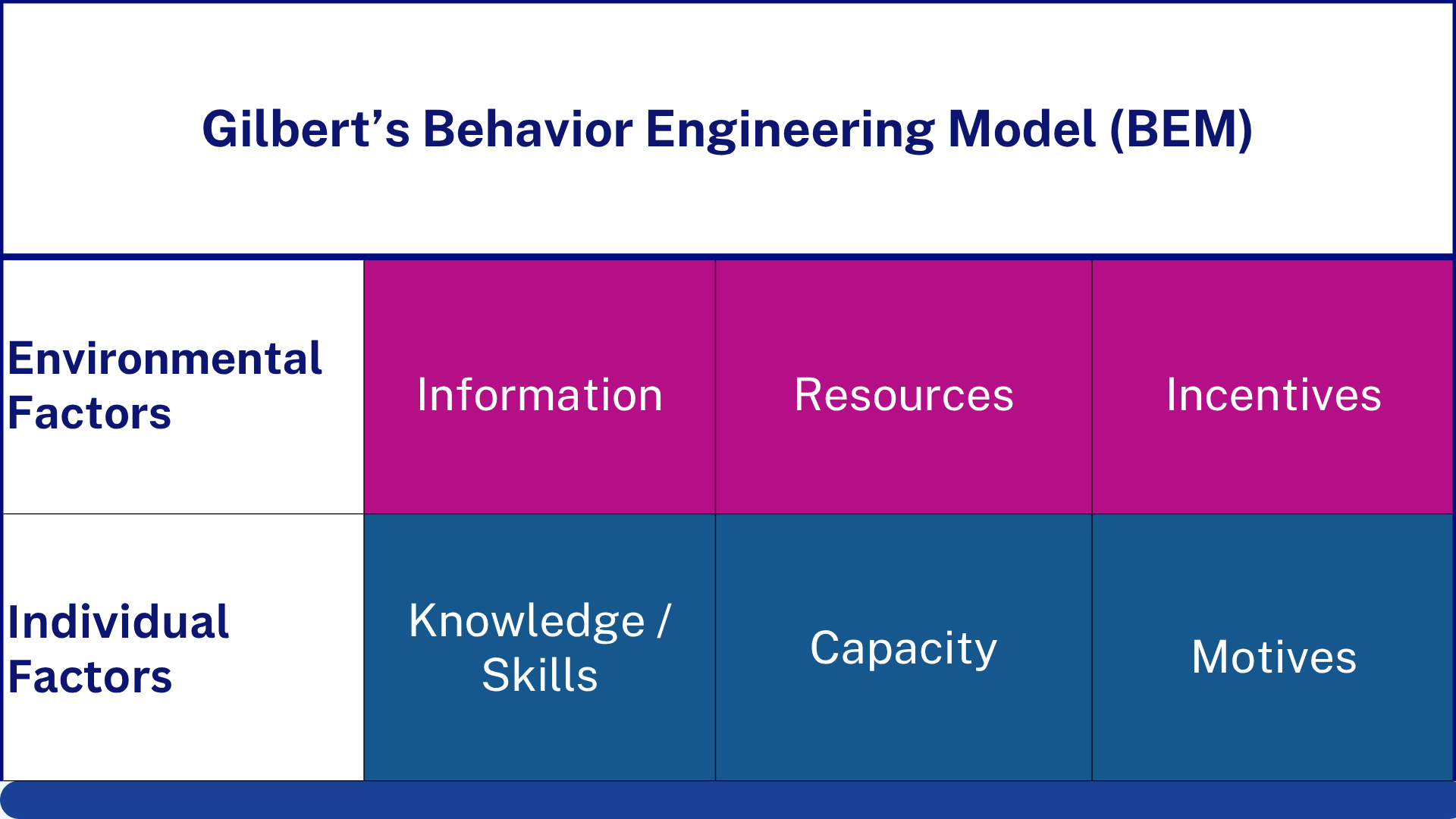
Our team applied recognized tools in designing our approach. We utilized Gilbert's Behavior Engineering Model (BEM) as our primary analytic lens, paired with Van Tiem et al.'s Human Performance Technology (HPT) model to structure data collection around performance factors. L&LI's Senior Director and Program Manager sponsored the assessment, providing extant data and access to critical stakeholders. Our team recognized the need for multiple forms of data collection and employed the following:
Semi-structured interviews — with a PI educator and a safety/quality team, using BEM-aligned questions.
Follow-up survey — Likert-scale and open-ended questions across all six BEM categories, administered to a mixed group of frontline leaders and PI staff.
Extant data review — internal strategy documents, OPS Education curriculum, FCOTS/RTT performance records
Triangulation — cross-referencing interview, survey, and extant data to identify convergent themes
Due to constraints such as limits to time allocated for data collection, poor engagement from respondents, and a predominance of secondary perspectives we did not receive enough data to provide large-scale information. However, we did gather meaningful insights into the performance gap and contributing factors that provided a framework for future investigation.
Cause
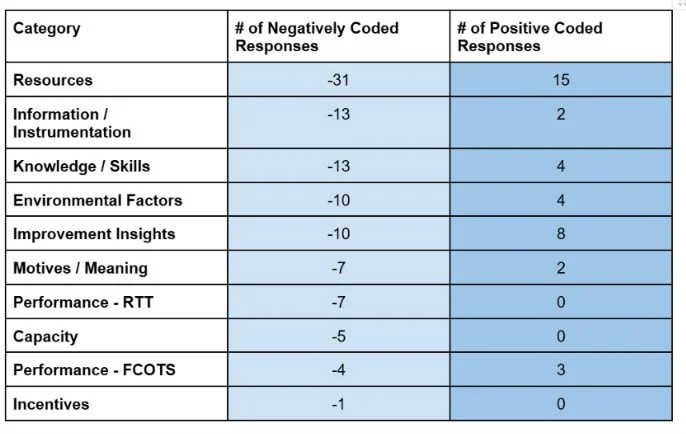
After triangulating the data, our team discovered that OR leaders rated environmental factors such as Information/Instruments, Resources, and Outcome/Performance Measures as the weakest categories. Individual factors such as Motives, Capacity, and Knowledge/Skills scored comparatively strong. These results indicated that OR leaders weren’t failing to provide performance improvements but were in fact facing systematic barriers prohibiting better outcomes.
High-performing markets were characterized by consistent access to process improvement expertise, clinical champions, and structured coaching that supports application of PI methods in real operational contexts. In contrast, leaders in lower-performing markets reported accountability for outcomes without equivalent access to expertise, influence, or post-training coaching, resulting in variable PI capability and weaker execution.
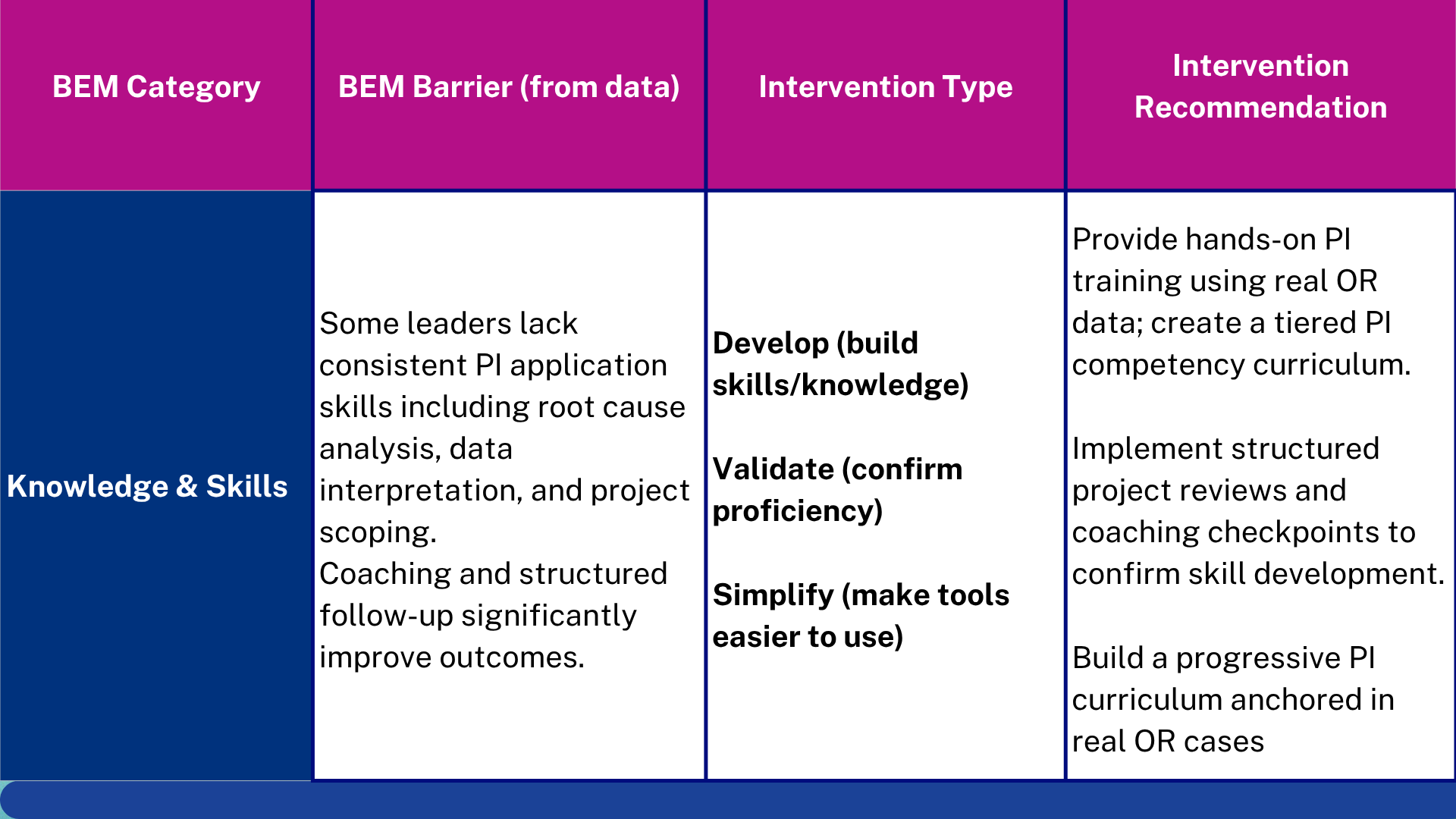
Sample Intervention for Category Knowledge & Skills
INTERVENTION
We opted to offer multiple interventions, choosing to rank them in order of feasibility. Interventions were mapped to cause using Gilbert's BEM to categorize the underlying performance factors, and Hale's Family of Interventions to determine the appropriate intervention type for each. Feasibility of the identified intervention was then assessed based on perceived alignment with L&LI's scope of authority and anticipated implementation effort:
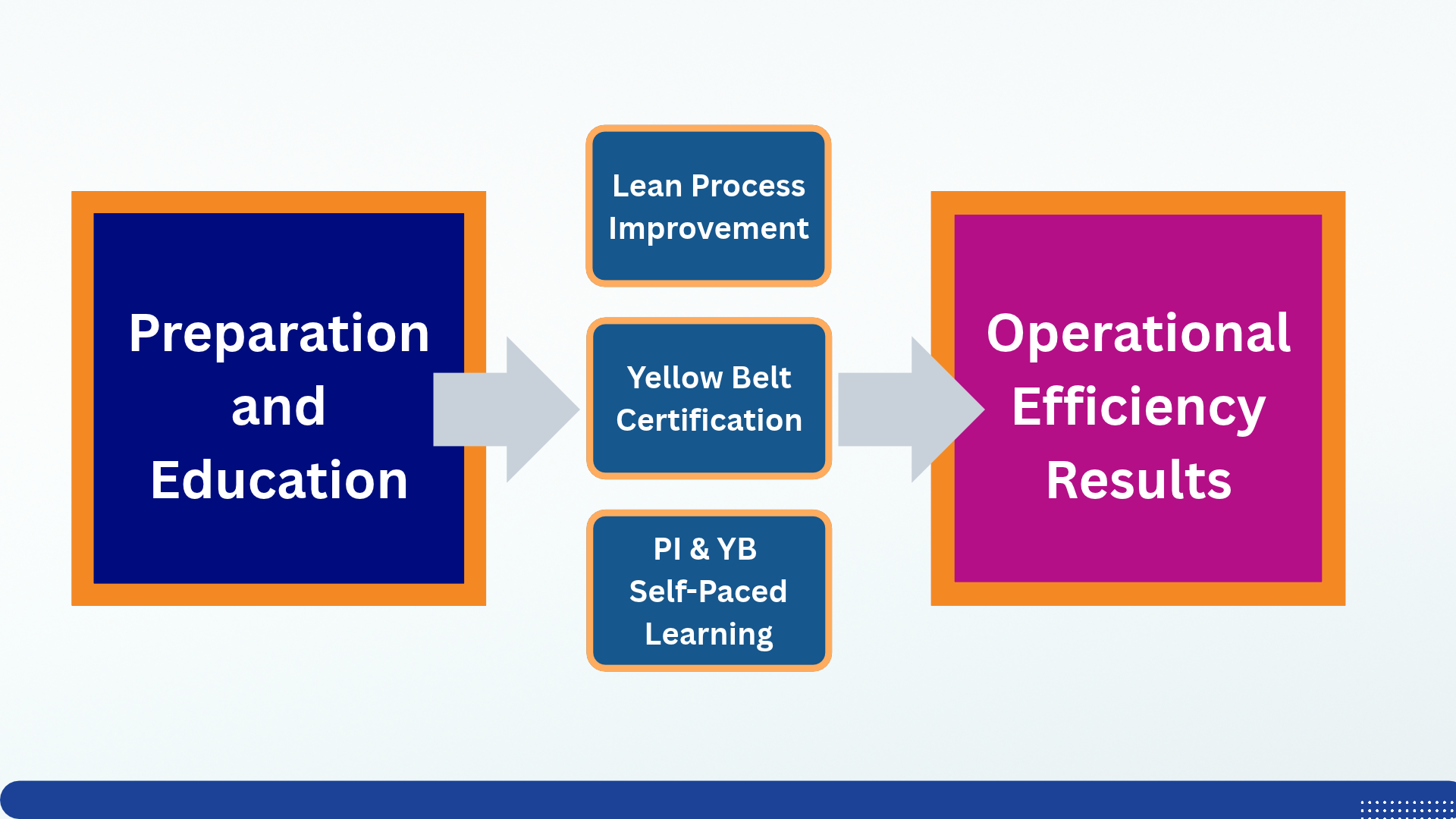
Knowledge & Skills(Develop, Validate, Simplify — Feasibility: High): hands-on PI training using real OR data; a tiered PI competency curriculum; structured project reviews and coaching checkpoints
Resources(Support, Streamline, Simplify — Feasibility: Medium): PI coaches, navigators, and physician champions per market; redesigned turnover workflows; simplified PI tools and templates
Information(Define, Explain, Validate — Feasibility: Medium): standardized metric definitions; a PI Data Handbook; quarterly data audits or a uniform reporting tool
Incentives(Manage — Feasibility: Moderate–Difficult): a shared OR Performance Scorecard aligning Nursing, Anesthesia, EVS, and Surgeons
Motives & Capacity(Influence, Align, Comfort, Reframe — Feasibility: Low): a PI Culture Campaign; resolving safety-vs-efficiency conflicts through aligned leadership messaging; reducing leader workload during major PI projects
Our goal was to present our findings rather than select one intervention strategy. The intervention selection did identify several intervention areas worthy of further exploration, but the limited sample size and the lack of sufficient extant data related to feasibility precluded confident prioritization.
REFLECTIONS

ALIGNMENT OF EXPECTATIONS AND SCOPE: Early, timely, and clear client communication is key to ensure alignment of expectations and scope. Clients may not already know what solution to apply, but they are always the expert on what they perceive is the gap. As an HPT and OD practioner, I believe following scientific practice to determine the performance gap is the ethical method of proceeding while also acknowledging that the same ethical practice means I cannot bring my own preconceived ideas into what the gap may be. If the client does not feel as if the team has correctly heard what gap he or she has identified, than the project results may not satisfy the client and certainly wouldn’t encourage continued engagement.
THE TYPE OF DATA IS IMPORTANT: As stated above, without access to primary sources we were unable to provide true confidence in our results. While we believe we gave the project sponsors enough data for future investigation, I think in the future that additional time for data collection and obtaining more client buy-in earlier in the process provides better opportunity to obtain necessary data.
DATA COLLECTION: Our project timeline only permitted a short window of time for data collection. Because of this short window, we were hampered by factors that might have otherwise been surmountable. Our response rate and access to our intended respondents didn’t go according to plan, and although we were able to pivot we still were not able to obtain and therefore analyze as data beneficial to the project sponsors.
In the future, I believe that working with the client earlier to obtain data might offset miscommunication or to notify her or him faster that a greater push for data collection may need to occur. I also believe that by choosing more sources of data (and in essence having a back-up plan) may be helpful in future assessments.